Gold Toning Treatment: Benefits, Procedure & Results
Gold toning treatment is a gentle skin brightening laser for sensitive and tanned skin. Learn benefits, procedure steps, results & FAQs. Book now in Bangalore.
Read More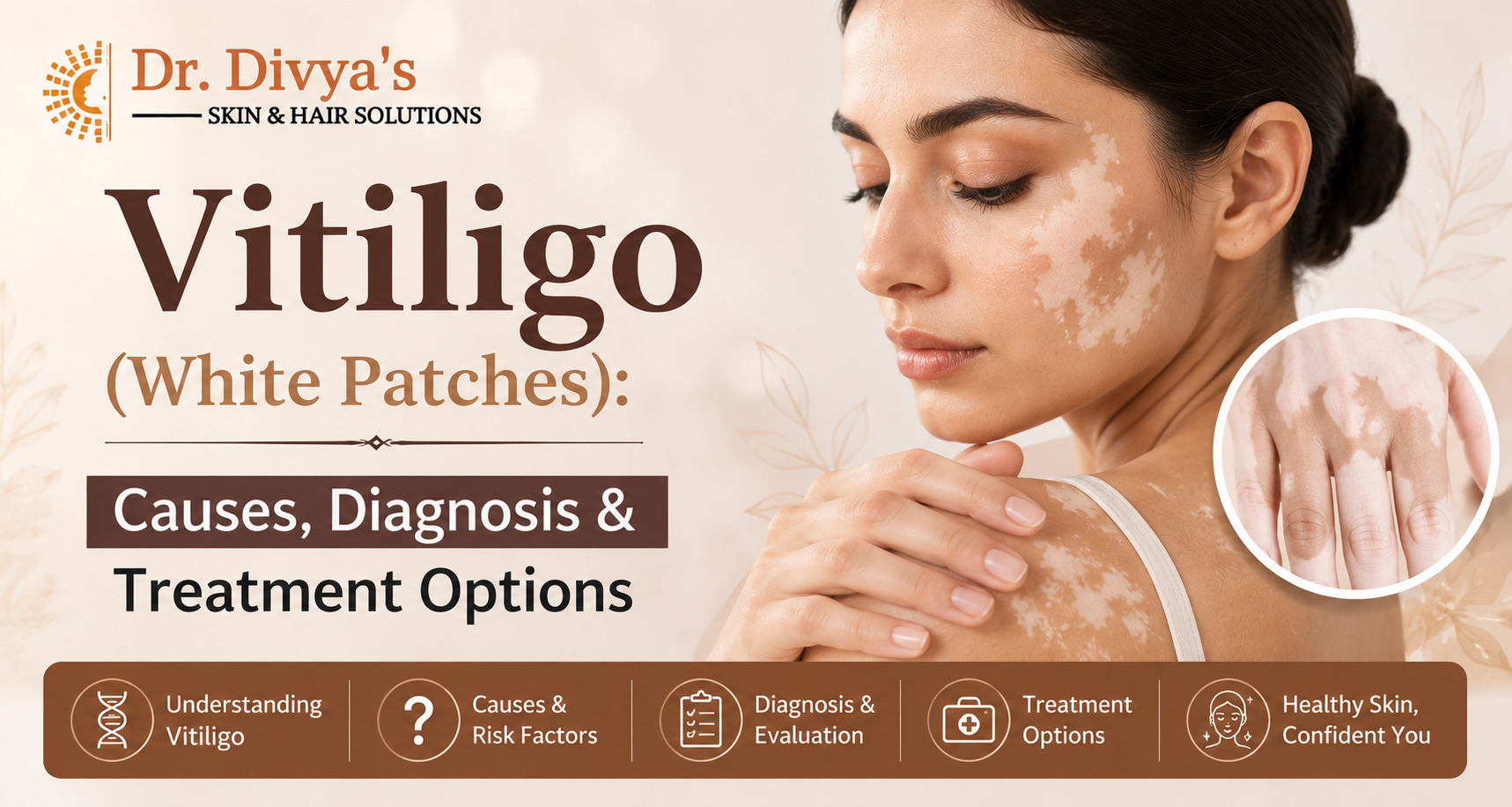
Finding a white patch on your skin for the first time can be unsettling. You might spend hours searching online, asking friends, or worrying about what it means. If you've landed here looking for honest answers about vitiligo — what causes it, how it's diagnosed, and what can actually be done about it — you're in the right place.
Vitiligo is more common than most people think, and while it isn't physically painful or dangerous, the emotional weight it carries is real. Understanding the condition properly is the first step toward managing it with confidence.
Vitiligo is an autoimmune condition where the body's immune system mistakenly attacks melanocytes — the cells responsible for producing melanin, the pigment that gives your skin its colour. When these cells are damaged or destroyed, the affected areas lose their colour and appear as white patches.
The exact trigger for this immune response isn't fully understood yet, but research points to a combination of factors:
Understanding the white patches on skin causes goes beyond just one factor — it's usually a combination of genetic susceptibility and environmental triggers that sets the process in motion. A qualified vitiligo dermatologist can help identify which factors may be relevant to your specific case.
Vitiligo often begins subtly, and catching it early can make a meaningful difference in how effectively it's managed. Here's what to watch for:
The patches themselves are typically well-defined, milky white, and smooth to the touch. They don't itch, flake, or cause pain — which is why many people don't notice them until they've already been present for a while.
If you spot any of these signs, booking a consultation with a dermatologist early is important. Not every white patch is vitiligo — conditions like fungal infections, post-inflammatory hypopigmentation, and pityriasis versicolor can look similar but require completely different treatment.
Diagnosis is usually straightforward for an experienced dermatologist, but a few tests help confirm the condition and rule out other possibilities.
Wood's Lamp Examination
This is the most common first step. A dermatologist uses a special UV light (Wood's lamp) to examine your skin. Under this light, vitiligo patches glow a bright blue-white colour, making them easy to distinguish from other pigmentary conditions. It's painless, quick, and can detect early vitiligo that isn't yet visible to the naked eye.
Dermoscopy
A dermatoscope — a handheld magnifying device with a light source — allows the dermatologist to look at the skin's surface and deeper layers more closely. It helps identify subtle changes in pigmentation and confirm the diagnosis.
Skin Biopsy
In uncertain cases, a small skin sample may be taken and examined under a microscope. The presence of melanocyte loss and specific immune cell patterns confirms vitiligo. This isn't always necessary but is useful when the diagnosis isn't clear from visual examination alone.
Blood Tests
Since vitiligo is associated with other autoimmune conditions, blood work may be ordered to check thyroid function (TSH, anti-TPO antibodies), blood sugar levels, vitamin B12, and other autoimmune markers. This helps build a complete picture of your health and guides treatment decisions.
Getting the right diagnosis matters. Self-diagnosing or delaying evaluation can mean missing early treatment opportunities or misidentifying a different condition altogether.
One of the most common questions people ask is "is vitiligo curable?" The honest answer is that there is currently no permanent cure, but effective treatments exist that can halt progression, restore pigment, and significantly improve the appearance of affected skin. The best approach depends on the extent, location, and stability of the vitiligo.
Topical Corticosteroids
These are often the first line of treatment, especially for limited vitiligo. They reduce inflammation and can help restore pigment in early or active patches. Different potencies are used depending on the body area — stronger for thicker skin like palms, milder for the face and neck. Side effects with long-term use include skin thinning, so monitoring is important.
Topical Calcineurin Inhibitors (Tacrolimus, Pimecrolimus)
These are steroid-free alternatives that work by modulating the immune response locally. They're particularly useful for facial vitiligo and sensitive areas where prolonged steroid use isn't ideal. They don't cause skin thinning and can be used for extended periods under medical supervision.
Oral Medications
In cases of rapidly spreading vitiligo, oral corticosteroids may be prescribed for a short period to stop the progression. Some dermatologists also use oral Pseudocatalase with narrow-band UVB light therapy. Newer options like JAK inhibitors (e.g., ruxolitinib) are showing promise in research, though availability and long-term data are still limited in India.
Vitiligo laser therapy has emerged as one of the more effective options, particularly for stable vitiligo that hasn't responded well to topical treatments.
Excimer Laser (308nm)
This targets only the affected areas without exposing surrounding healthy skin to UV radiation. It stimulates melanocyte activity and repigmentation in the treated patches. Sessions are short — usually a few minutes per area — and are typically done 2-3 times a week. Results become noticeable after 20-30 sessions, though this varies.
Narrowband UVB (NB-UVB) Phototherapy
While not a laser in the traditional sense, NB-UVB is a standard and well-researched treatment for widespread vitiligo. It's administered in a light booth and requires consistent sessions over several months. It's one of the most cost-effective options for extensive vitiligo.
Laser and light-based treatments tend to work best on the face and neck, where repigmentation rates are highest. Hands and feet, which have fewer melanocyte reservoirs, respond more slowly.
For stable vitiligo that hasn't responded to medical or laser treatments, surgical options may be considered. These are typically reserved for cases where the vitiligo has been stable (no new patches) for at least 1-2 years.
Epidermal Skin Grafting
Thin layers of pigmented skin are harvested from a donor site (usually the thigh or buttock) and transplanted onto the depigmented areas. It works well for small, stable patches.
Suction Blister Grafting
Blisters are created on pigmented skin using suction, and the roofs of these blisters are transferred to the affected area. It's less invasive than traditional grafting and leaves minimal scarring.
Melanocyte Transplantation
A more advanced technique where melanocytes are extracted from healthy skin, multiplied in a lab, and then transplanted. This is available at specialised centres and can be effective for larger areas.
Surgery is not suitable for everyone — people with keloid tendencies, active spreading vitiligo, or certain body areas (like eyelids) are generally not candidates. A thorough evaluation is essential before considering any surgical approach.
Treatment is only one part of the equation. Living well with vitiligo involves a broader approach that addresses both skin health and emotional well-being.
Vitiligo is a condition that requires patience. Results take time, and no single treatment works for everyone. But with the right guidance, consistent care, and realistic expectations, most people find a management plan that works for their lifestyle and goals.
For a detailed evaluation and personalised treatment plan, consult a vitiligo treatment specialist in Bangalore who can guide you through every stage of the process.
No. Vitiligo is absolutely not contagious. You cannot catch it from someone through physical contact, sharing personal items, or being in close proximity. It is an autoimmune condition, meaning it originates from within the body's own immune system. There is no need to worry about transmission — this is one of the most important facts for people with vitiligo and those around them to understand.
As of now, there is no permanent cure for vitiligo. However, that doesn't mean treatment is pointless. Many people achieve significant repigmentation through a combination of medications, laser therapy, and in some cases, surgical interventions. The key is early and consistent treatment, realistic expectations, and working with an experienced dermatologist who can tailor a plan to your specific type and extent of vitiligo.
Several factors can trigger new patches or expansion of existing ones. Common triggers include sunburn or skin injury (the Koebner phenomenon), significant emotional or physical stress, exposure to certain industrial chemicals, and in some cases, hormonal changes. Starting treatment early and protecting your skin from trauma and excessive sun exposure can help reduce the risk of spread.
There is no scientifically proven diet that cures or worsens vitiligo. However, some studies suggest that oxidative stress plays a role in melanocyte damage, so a diet rich in antioxidants — berries, leafy greens, nuts, seeds — may support overall skin health. Deficiencies in vitamin B12, vitamin D, zinc, and copper have been observed in some vitiligo patients, so addressing these through diet or supplementation (under medical guidance) can be beneficial. Avoiding excessive amounts of foods high in phenols and certain chemicals that may interfere with melanin production is sometimes suggested, though evidence is limited.
Finding a white patch on your skin for the first time can be unsettling. You might spend hours searching online, asking friends, or worrying about what it means. If you've landed here looking for honest answers about vitiligo — what causes it, how it's diagnosed, and what can actually be done about it — you're in the right place.
Vitiligo is more common than most people think, and while it isn't physically painful or dangerous, the emotional weight it carries is real. Understanding the condition properly is the first step toward managing it with confidence.
Vitiligo is an autoimmune condition where the body's immune system mistakenly attacks melanocytes — the cells responsible for producing melanin, the pigment that gives your skin its colour. When these cells are damaged or destroyed, the affected areas lose their colour and appear as white patches.
The exact trigger for this immune response isn't fully understood yet, but research points to a combination of factors:
Understanding the white patches on skin causes goes beyond just one factor — it's usually a combination of genetic susceptibility and environmental triggers that sets the process in motion. A qualified vitiligo dermatologist can help identify which factors may be relevant to your specific case.
Vitiligo often begins subtly, and catching it early can make a meaningful difference in how effectively it's managed. Here's what to watch for:
The patches themselves are typically well-defined, milky white, and smooth to the touch. They don't itch, flake, or cause pain — which is why many people don't notice them until they've already been present for a while.
If you spot any of these signs, booking a consultation with a dermatologist early is important. Not every white patch is vitiligo — conditions like fungal infections, post-inflammatory hypopigmentation, and pityriasis versicolor can look similar but require completely different treatment.
Diagnosis is usually straightforward for an experienced dermatologist, but a few tests help confirm the condition and rule out other possibilities.
Wood's Lamp Examination
This is the most common first step. A dermatologist uses a special UV light (Wood's lamp) to examine your skin. Under this light, vitiligo patches glow a bright blue-white colour, making them easy to distinguish from other pigmentary conditions. It's painless, quick, and can detect early vitiligo that isn't yet visible to the naked eye.
Dermoscopy
A dermatoscope — a handheld magnifying device with a light source — allows the dermatologist to look at the skin's surface and deeper layers more closely. It helps identify subtle changes in pigmentation and confirm the diagnosis.
Skin Biopsy
In uncertain cases, a small skin sample may be taken and examined under a microscope. The presence of melanocyte loss and specific immune cell patterns confirms vitiligo. This isn't always necessary but is useful when the diagnosis isn't clear from visual examination alone.
Blood Tests
Since vitiligo is associated with other autoimmune conditions, blood work may be ordered to check thyroid function (TSH, anti-TPO antibodies), blood sugar levels, vitamin B12, and other autoimmune markers. This helps build a complete picture of your health and guides treatment decisions.
Getting the right diagnosis matters. Self-diagnosing or delaying evaluation can mean missing early treatment opportunities or misidentifying a different condition altogether.
One of the most common questions people ask is "is vitiligo curable?" The honest answer is that there is currently no permanent cure, but effective treatments exist that can halt progression, restore pigment, and significantly improve the appearance of affected skin. The best approach depends on the extent, location, and stability of the vitiligo.
Topical Corticosteroids
These are often the first line of treatment, especially for limited vitiligo. They reduce inflammation and can help restore pigment in early or active patches. Different potencies are used depending on the body area — stronger for thicker skin like palms, milder for the face and neck. Side effects with long-term use include skin thinning, so monitoring is important.
Topical Calcineurin Inhibitors (Tacrolimus, Pimecrolimus)
These are steroid-free alternatives that work by modulating the immune response locally. They're particularly useful for facial vitiligo and sensitive areas where prolonged steroid use isn't ideal. They don't cause skin thinning and can be used for extended periods under medical supervision.
Oral Medications
In cases of rapidly spreading vitiligo, oral corticosteroids may be prescribed for a short period to stop the progression. Some dermatologists also use oral Pseudocatalase with narrow-band UVB light therapy. Newer options like JAK inhibitors (e.g., ruxolitinib) are showing promise in research, though availability and long-term data are still limited in India.
Vitiligo laser therapy has emerged as one of the more effective options, particularly for stable vitiligo that hasn't responded well to topical treatments.
Excimer Laser (308nm)
This targets only the affected areas without exposing surrounding healthy skin to UV radiation. It stimulates melanocyte activity and repigmentation in the treated patches. Sessions are short — usually a few minutes per area — and are typically done 2-3 times a week. Results become noticeable after 20-30 sessions, though this varies.
Narrowband UVB (NB-UVB) Phototherapy
While not a laser in the traditional sense, NB-UVB is a standard and well-researched treatment for widespread vitiligo. It's administered in a light booth and requires consistent sessions over several months. It's one of the most cost-effective options for extensive vitiligo.
Laser and light-based treatments tend to work best on the face and neck, where repigmentation rates are highest. Hands and feet, which have fewer melanocyte reservoirs, respond more slowly.
For stable vitiligo that hasn't responded to medical or laser treatments, surgical options may be considered. These are typically reserved for cases where the vitiligo has been stable (no new patches) for at least 1-2 years.
Epidermal Skin Grafting
Thin layers of pigmented skin are harvested from a donor site (usually the thigh or buttock) and transplanted onto the depigmented areas. It works well for small, stable patches.
Suction Blister Grafting
Blisters are created on pigmented skin using suction, and the roofs of these blisters are transferred to the affected area. It's less invasive than traditional grafting and leaves minimal scarring.
Melanocyte Transplantation
A more advanced technique where melanocytes are extracted from healthy skin, multiplied in a lab, and then transplanted. This is available at specialised centres and can be effective for larger areas.
Surgery is not suitable for everyone — people with keloid tendencies, active spreading vitiligo, or certain body areas (like eyelids) are generally not candidates. A thorough evaluation is essential before considering any surgical approach.
Treatment is only one part of the equation. Living well with vitiligo involves a broader approach that addresses both skin health and emotional well-being.
Vitiligo is a condition that requires patience. Results take time, and no single treatment works for everyone. But with the right guidance, consistent care, and realistic expectations, most people find a management plan that works for their lifestyle and goals.
For a detailed evaluation and personalised treatment plan, consult a vitiligo treatment specialist in Bangalore who can guide you through every stage of the process.
No. Vitiligo is absolutely not contagious. You cannot catch it from someone through physical contact, sharing personal items, or being in close proximity. It is an autoimmune condition, meaning it originates from within the body's own immune system. There is no need to worry about transmission — this is one of the most important facts for people with vitiligo and those around them to understand.
As of now, there is no permanent cure for vitiligo. However, that doesn't mean treatment is pointless. Many people achieve significant repigmentation through a combination of medications, laser therapy, and in some cases, surgical interventions. The key is early and consistent treatment, realistic expectations, and working with an experienced dermatologist who can tailor a plan to your specific type and extent of vitiligo.
Several factors can trigger new patches or expansion of existing ones. Common triggers include sunburn or skin injury (the Koebner phenomenon), significant emotional or physical stress, exposure to certain industrial chemicals, and in some cases, hormonal changes. Starting treatment early and protecting your skin from trauma and excessive sun exposure can help reduce the risk of spread.
There is no scientifically proven diet that cures or worsens vitiligo. However, some studies suggest that oxidative stress plays a role in melanocyte damage, so a diet rich in antioxidants — berries, leafy greens, nuts, seeds — may support overall skin health. Deficiencies in vitamin B12, vitamin D, zinc, and copper have been observed in some vitiligo patients, so addressing these through diet or supplementation (under medical guidance) can be beneficial. Avoiding excessive amounts of foods high in phenols and certain chemicals that may interfere with melanin production is sometimes suggested, though evidence is limited.

Gold toning treatment is a gentle skin brightening laser for sensitive and tanned skin. Learn benefits, procedure steps, results & FAQs. Book now in Bangalore.
Read More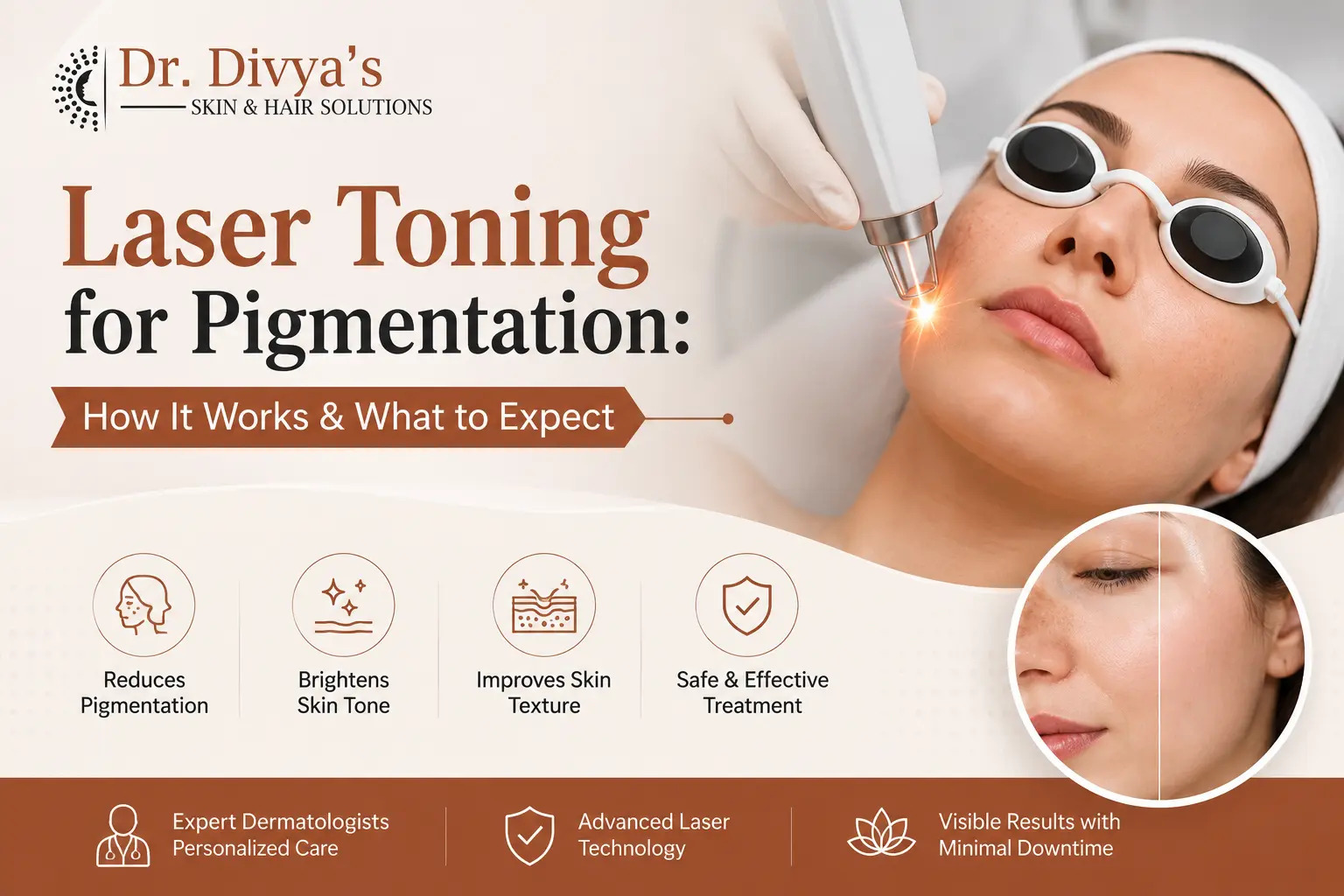
If dark patches or uneven skin tone have been bothering you, laser toning could be the answer. This post breaks down how it works, what it feels like, how many sessions you will need, and what to expect after each visit. No jargon. Just real talk.
Read More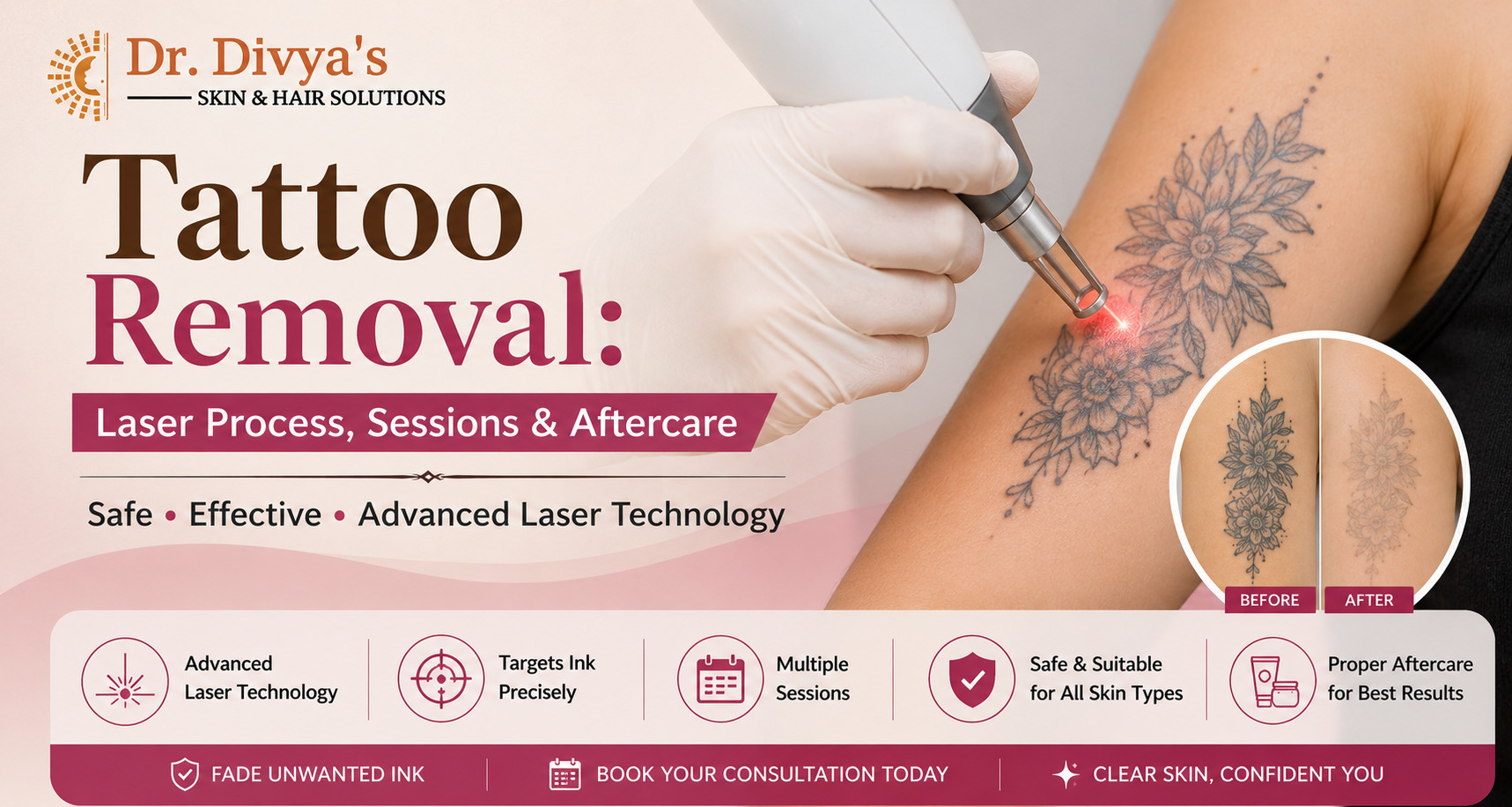
Laser tattoo removal breaks ink particles for natural elimination. Learn how it works, number of sessions needed, pain options, aftercare & risks.
Read More
This complete guide will answer all your questions. Whether you are looking for an instant glow facial treatment or want to understand the Hollywood peel cost and benefits, this article covers everything you need to know.
Read More
This article walks you through everything you need to know about skin pigmentation, what causes it, the different types, the best treatment options available in Bangalore, and how to prevent it.
Read More