Gold Toning Treatment: Benefits, Procedure & Results
Gold toning treatment is a gentle skin brightening laser for sensitive and tanned skin. Learn benefits, procedure steps, results & FAQs. Book now in Bangalore.
Read More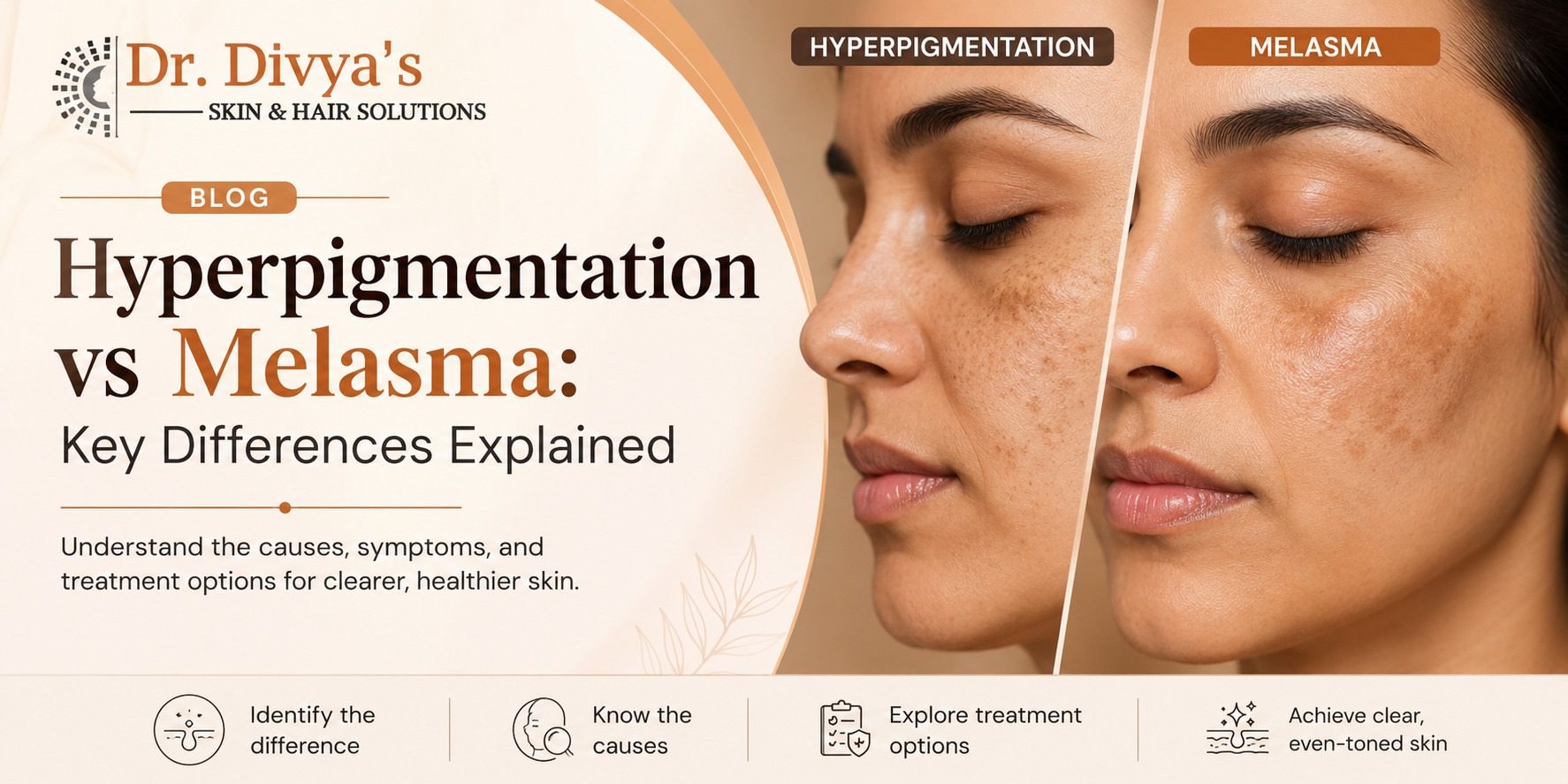
<meta charset="utf-8" />
If you have noticed dark patches or uneven spots on your face, you may be wondering whether it is hyperpigmentation or melasma. These two terms are often used interchangeably, but they are not the same. Understanding the difference between them is important because the right treatment depends on getting the right diagnosis.
In this article, we will break down Hyperpigmentation vs Melasma in simple terms. We will explain what each condition is, what causes it, how it looks, and why the treatment approach is different. Whether you are dealing with stubborn dark patches on face causes or trying to understand your uneven skin tone, this guide will help you make sense of your skin.
If you have any concerns about your skin, you can explore our Skin Concerns page to understand the conditions we treat.
Hyperpigmentation is a broad term used for any condition where patches of skin become darker than the surrounding skin. It happens when the body produces too much melanin, the natural pigment that gives your skin its colour. Hyperpigmentation is not a disease. It is a symptom of various underlying triggers.
There are several types of hyperpigmentation, including:
Post-inflammatory hyperpigmentation (PIH): This occurs after an injury, inflammation, or acne. It is also called acne marks or acne scars.
Sun spots or age spots: These develop after years of sun damage and UV exposure.
Freckles: Small, harmless spots that are often genetic and become darker with sun exposure.
Melasma: A specific type of hyperpigmentation that has its own unique causes and features (more on that below).
Hyperpigmentation can affect anyone regardless of age, gender, or skin type. However, people with darker skin tones are more prone to certain types like PIH.
Melasma is a specific form of facial pigmentation that appears as brown or grey-brown patches on the face. Unlike general hyperpigmentation, which can appear anywhere on the body, melasma is almost always found on the face. It appears in a symmetrical pattern — meaning both sides of the face are affected in the same way.
Melasma is strongly linked to hormonal pigmentation. It is commonly triggered by pregnancy, birth control pills, or hormone therapy. This is why it is also known as chloasma or the "pregnancy mask." However, men can also develop melasma, though it is less common.
The patches in melasma are larger, more defined, and more stubborn than most other forms of hyperpigmentation. This makes Hyperpigmentation vs Melasma an important comparison to understand for anyone looking for the right treatment.
To make the difference between melasma and pigmentation clear, here is a side-by-side comparison:
|
Feature |
Hyperpigmentation |
Melasma |
|
Cause |
Inflammation, acne, injury, medications, sun exposure |
Hormonal changes, pregnancy, genetics, sun exposure |
|
Appearance |
Small dark spots, patches, or uneven areas |
Large, symmetrical brown or grey-brown patches |
|
Common areas |
Face, neck, hands, arms, back, legs |
Almost always on the face — cheeks, forehead, nose, chin, upper lip |
|
Triggers |
Acne, skin injury, sun, drugs, medical conditions |
Hormones, pregnancy, sunlight, heat, visible light |
|
Risk factors |
Darker skin types, history of acne or skin trauma |
Female gender, pregnancy, family history, hormonal medication |
|
Diagnosis |
Usually based on visual examination and history |
Wood's lamp examination to check depth of pigmentation |
|
Treatment |
Topical creams, chemical peels, laser therapy aimed at melanin reduction |
Combination therapy, gentle lasers, strict sun protection, long-term management |
|
Recurrence |
Can recur if trigger (like sun or acne) returns |
High chance of recurrence without maintenance and sun protection |
Hyperpigmentation can be triggered by many factors. Here are the most common ones:
When acne heals, it often leaves behind post-inflammatory hyperpigmentation or PIH. This is more common in darker skin tones. The dark marks can last for weeks or months without treatment.
Cuts, burns, or any trauma to the skin can cause dark spots to form as the skin heals. This is the skin's way of protecting itself during the healing process.
Eczema, psoriasis, or other inflammatory skin pigmentation conditions can leave dark patches after the inflammation subsides.
Prolonged UV exposure triggers excess melanin production. Over time, this leads to sun damage, which appears as dark spots, age spots, and uneven skin tone.
Some antibiotics, chemotherapy drugs, and anti-seizure medications can cause hyperpigmentation as a side effect.
Conditions like Addison's disease and some hormonal disorders can cause generalised hyperpigmentation across the body.
Melasma has a more specific set of triggers:
This is the most common cause. Fluctuations in estrogen and progesterone levels can trigger excess melanin production. This is why melasma is so common in women.
Pregnancy melasma is very common and affects a large number of expecting mothers. Hormonal changes combined with sun exposure make it worse.
Oral contraceptives can trigger melasma in women who are genetically predisposed. The hormones in the pills stimulate melanin production.
Like all pigmentation issues, the sun makes melasma worse. Even a few minutes of unprotected sun exposure can darken melasma patches significantly.
Melasma often runs in families. If your mother or sister has it, you are more likely to develop it too.
A proper diagnosis is the most important step in treating any skin concern. You should always see a dermatologist to determine whether you have hyperpigmentation, melasma, or both.
The doctor will look at your skin closely. They will check the colour, size, location, and pattern of the pigmentation. This alone can often give them a strong idea of what they are dealing with.
Your dermatologist will ask about your medical history, current medications, pregnancy status, hormone therapy, and family history of pigmentation. This helps identify the underlying triggers.
Some clinics use advanced skin analysis tools to measure melanin levels and damage at deeper layers of the skin.
A Wood's lamp examination is a simple test where a special ultraviolet light is used to examine the skin. It helps the doctor determine whether the pigmentation is in the top layer (epidermal) or deeper layers (dermal). This is especially useful for telling the difference between melasma and pigmentation.
In rare cases, a skin biopsy may be needed to rule out other medical conditions. Your dermatologist will recommend this only if absolutely necessary. To understand how we approach every case, visit our Pigmentation Treatment page.
One of the most important things to understand about Hyperpigmentation vs Melasma is that they need different treatment approaches. Here is why:
Hyperpigmentation like PIH or age spots usually responds well to treatment. Options include:
Topical creams with ingredients like kojic acid, vitamin C, niacinamide, and retinoids
Chemical peels to remove the pigmented top layer of skin
Laser treatment to target and break down melanin deposits
Most types of hyperpigmentation show good improvement within a few months of consistent treatment.
Melasma is more stubborn and requires a gentler, more careful approach:
Topical creams including hydroquinone, azelaic acid, and tranexamic acid
Gentle chemical peels to avoid irritation
Laser treatment with low-energy settings to avoid making melasma worse
Strict sunscreen use with high broad-spectrum SPF
Long-term management and maintenance care
Melasma can worsen if treated too aggressively. That is why it is so important to see a dermatologist who specialises in pigmentation disorders. Every patient needs a customised pigmentation correction plan. You can read more about our approach on the Expert Dermatology Care page.
You should see a dermatologist if:
Dark patches or spots are spreading or getting darker
You are unsure whether you have hyperpigmentation or melasma
Over-the-counter products are not working
The pigmentation is affecting your confidence or quality of life
You have a family history of melasma or skin conditions
You notice pigmentation on other parts of your body along with other symptoms
A qualified dermatologist, especially a trusted Whitefield dermatologist like Dr. Divya Sharma, can give you a clear diagnosis and a treatment plan that actually works for your skin.
Dr. Divya Sharma is a highly experienced dermatologist who understands the complexity of pigmentation disorders. She knows that every patient is different, and she treats each case with the attention it deserves.
Accurate Diagnosis: With thorough clinical examination and modern diagnostic tools, Dr. Sharma ensures that your condition is correctly identified before any treatment begins.
Personalized Treatment: No two patients get the same treatment plan. Your skin type, lifestyle, and concerns are all taken into account.
Modern Technology: The clinic is equipped with advanced lasers and equipment for safe and effective treatment of both hyperpigmentation and melasma.
Patient-Centric Approach: You will be guided through every step of your treatment. Dr. Sharma believes in educating her patients so they can take better care of their skin.
Whether you need skin rejuvenation, pigmentation treatment, or just guidance on the right skincare routine, Dr. Divya Sharma is here to help. Visit our Skin Pigmentation Solutions page to learn more.
The easiest way to tell is by looking at the pattern. Melasma usually appears as large, symmetrical brown or grey patches on both sides of the face — commonly on the cheeks, forehead, and upper lip. Regular hyperpigmentation often appears as smaller spots or patches and can appear anywhere on the body, not just the face. Melasma is also strongly linked to hormonal changes like pregnancy or birth control use. However, the only way to be completely sure is to see a dermatologist for a professional diagnosis using tools like a Wood's lamp.
No. While some treatments overlap, the approach is different. Hyperpigmentation like dark spots or acne marks often responds well to chemical peels and laser treatments. Melasma is more sensitive and can worsen if treated too aggressively. Melasma requires a gentler approach with combination therapy, strict sun protection, and long-term maintenance. Using the wrong treatment can make melasma darker or more stubborn. That is why it is essential to get a correct diagnosis before starting any treatment.
No, hyperpigmentation does not turn into melasma. They are two separate conditions with different underlying causes. Hyperpigmentation is triggered by external factors like acne, injury, or sun exposure. Melasma is driven by internal factors like hormones and genetics. However, a person can have both conditions at the same time. For example, someone with melasma may also develop post-inflammatory hyperpigmentation after an acne breakout. A dermatologist can identify each type of pigmentation and treat them accordingly.
Understanding the difference between hyperpigmentation and melasma is important because the right treatment starts with the right diagnosis. While both conditions involve dark patches on the skin, their causes, appearance, and treatment approaches are quite different. Hyperpigmentation is usually easier to treat, while melasma requires a more careful and consistent approach.
If you are struggling with dark patches or uneven skin tone, do not guess. Consult a qualified dermatologist who can give you the right answer and the right plan. Dr. Divya Sharma and her team are here to help you achieve clearer, healthier skin with personalised care and advanced treatments.
Book your consultation today and take the first step toward the skin you deserve.
If you have noticed dark patches or uneven spots on your face, you may be wondering whether it is hyperpigmentation or melasma. These two terms are often used interchangeably, but they are not the same. Understanding the difference between them is important because the right treatment depends on getting the right diagnosis.
In this article, we will break down Hyperpigmentation vs Melasma in simple terms. We will explain what each condition is, what causes it, how it looks, and why the treatment approach is different. Whether you are dealing with stubborn dark patches on face causes or trying to understand your uneven skin tone, this guide will help you make sense of your skin.
If you have any concerns about your skin, you can explore our Skin Concerns page to understand the conditions we treat.
Hyperpigmentation is a broad term used for any condition where patches of skin become darker than the surrounding skin. It happens when the body produces too much melanin, the natural pigment that gives your skin its colour. Hyperpigmentation is not a disease. It is a symptom of various underlying triggers.
There are several types of hyperpigmentation, including:
Post-inflammatory hyperpigmentation (PIH): This occurs after an injury, inflammation, or acne. It is also called acne marks or acne scars.
Sun spots or age spots: These develop after years of sun damage and UV exposure.
Freckles: Small, harmless spots that are often genetic and become darker with sun exposure.
Melasma: A specific type of hyperpigmentation that has its own unique causes and features (more on that below).
Hyperpigmentation can affect anyone regardless of age, gender, or skin type. However, people with darker skin tones are more prone to certain types like PIH.
Melasma is a specific form of facial pigmentation that appears as brown or grey-brown patches on the face. Unlike general hyperpigmentation, which can appear anywhere on the body, melasma is almost always found on the face. It appears in a symmetrical pattern — meaning both sides of the face are affected in the same way.
Melasma is strongly linked to hormonal pigmentation. It is commonly triggered by pregnancy, birth control pills, or hormone therapy. This is why it is also known as chloasma or the "pregnancy mask." However, men can also develop melasma, though it is less common.
The patches in melasma are larger, more defined, and more stubborn than most other forms of hyperpigmentation. This makes Hyperpigmentation vs Melasma an important comparison to understand for anyone looking for the right treatment.
To make the difference between melasma and pigmentation clear, here is a side-by-side comparison:
|
Feature |
Hyperpigmentation |
Melasma |
|
Cause |
Inflammation, acne, injury, medications, sun exposure |
Hormonal changes, pregnancy, genetics, sun exposure |
|
Appearance |
Small dark spots, patches, or uneven areas |
Large, symmetrical brown or grey-brown patches |
|
Common areas |
Face, neck, hands, arms, back, legs |
Almost always on the face — cheeks, forehead, nose, chin, upper lip |
|
Triggers |
Acne, skin injury, sun, drugs, medical conditions |
Hormones, pregnancy, sunlight, heat, visible light |
|
Risk factors |
Darker skin types, history of acne or skin trauma |
Female gender, pregnancy, family history, hormonal medication |
|
Diagnosis |
Usually based on visual examination and history |
Wood's lamp examination to check depth of pigmentation |
|
Treatment |
Topical creams, chemical peels, laser therapy aimed at melanin reduction |
Combination therapy, gentle lasers, strict sun protection, long-term management |
|
Recurrence |
Can recur if trigger (like sun or acne) returns |
High chance of recurrence without maintenance and sun protection |
Hyperpigmentation can be triggered by many factors. Here are the most common ones:
When acne heals, it often leaves behind post-inflammatory hyperpigmentation or PIH. This is more common in darker skin tones. The dark marks can last for weeks or months without treatment.
Cuts, burns, or any trauma to the skin can cause dark spots to form as the skin heals. This is the skin's way of protecting itself during the healing process.
Eczema, psoriasis, or other inflammatory skin pigmentation conditions can leave dark patches after the inflammation subsides.
Prolonged UV exposure triggers excess melanin production. Over time, this leads to sun damage, which appears as dark spots, age spots, and uneven skin tone.
Some antibiotics, chemotherapy drugs, and anti-seizure medications can cause hyperpigmentation as a side effect.
Conditions like Addison's disease and some hormonal disorders can cause generalised hyperpigmentation across the body.
Melasma has a more specific set of triggers:
This is the most common cause. Fluctuations in estrogen and progesterone levels can trigger excess melanin production. This is why melasma is so common in women.
Pregnancy melasma is very common and affects a large number of expecting mothers. Hormonal changes combined with sun exposure make it worse.
Oral contraceptives can trigger melasma in women who are genetically predisposed. The hormones in the pills stimulate melanin production.
Like all pigmentation issues, the sun makes melasma worse. Even a few minutes of unprotected sun exposure can darken melasma patches significantly.
Melasma often runs in families. If your mother or sister has it, you are more likely to develop it too.
A proper diagnosis is the most important step in treating any skin concern. You should always see a dermatologist to determine whether you have hyperpigmentation, melasma, or both.
The doctor will look at your skin closely. They will check the colour, size, location, and pattern of the pigmentation. This alone can often give them a strong idea of what they are dealing with.
Your dermatologist will ask about your medical history, current medications, pregnancy status, hormone therapy, and family history of pigmentation. This helps identify the underlying triggers.
Some clinics use advanced skin analysis tools to measure melanin levels and damage at deeper layers of the skin.
A Wood's lamp examination is a simple test where a special ultraviolet light is used to examine the skin. It helps the doctor determine whether the pigmentation is in the top layer (epidermal) or deeper layers (dermal). This is especially useful for telling the difference between melasma and pigmentation.
In rare cases, a skin biopsy may be needed to rule out other medical conditions. Your dermatologist will recommend this only if absolutely necessary. To understand how we approach every case, visit our Pigmentation Treatment page.
One of the most important things to understand about Hyperpigmentation vs Melasma is that they need different treatment approaches. Here is why:
Hyperpigmentation like PIH or age spots usually responds well to treatment. Options include:
Topical creams with ingredients like kojic acid, vitamin C, niacinamide, and retinoids
Chemical peels to remove the pigmented top layer of skin
Laser treatment to target and break down melanin deposits
Most types of hyperpigmentation show good improvement within a few months of consistent treatment.
Melasma is more stubborn and requires a gentler, more careful approach:
Topical creams including hydroquinone, azelaic acid, and tranexamic acid
Gentle chemical peels to avoid irritation
Laser treatment with low-energy settings to avoid making melasma worse
Strict sunscreen use with high broad-spectrum SPF
Long-term management and maintenance care
Melasma can worsen if treated too aggressively. That is why it is so important to see a dermatologist who specialises in pigmentation disorders. Every patient needs a customised pigmentation correction plan. You can read more about our approach on the Expert Dermatology Care page.
You should see a dermatologist if:
Dark patches or spots are spreading or getting darker
You are unsure whether you have hyperpigmentation or melasma
Over-the-counter products are not working
The pigmentation is affecting your confidence or quality of life
You have a family history of melasma or skin conditions
You notice pigmentation on other parts of your body along with other symptoms
A qualified dermatologist, especially a trusted Whitefield dermatologist like Dr. Divya Sharma, can give you a clear diagnosis and a treatment plan that actually works for your skin.
Dr. Divya Sharma is a highly experienced dermatologist who understands the complexity of pigmentation disorders. She knows that every patient is different, and she treats each case with the attention it deserves.
Accurate Diagnosis: With thorough clinical examination and modern diagnostic tools, Dr. Sharma ensures that your condition is correctly identified before any treatment begins.
Personalized Treatment: No two patients get the same treatment plan. Your skin type, lifestyle, and concerns are all taken into account.
Modern Technology: The clinic is equipped with advanced lasers and equipment for safe and effective treatment of both hyperpigmentation and melasma.
Patient-Centric Approach: You will be guided through every step of your treatment. Dr. Sharma believes in educating her patients so they can take better care of their skin.
Whether you need skin rejuvenation, pigmentation treatment, or just guidance on the right skincare routine, Dr. Divya Sharma is here to help. Visit our Skin Pigmentation Solutions page to learn more.
The easiest way to tell is by looking at the pattern. Melasma usually appears as large, symmetrical brown or grey patches on both sides of the face — commonly on the cheeks, forehead, and upper lip. Regular hyperpigmentation often appears as smaller spots or patches and can appear anywhere on the body, not just the face. Melasma is also strongly linked to hormonal changes like pregnancy or birth control use. However, the only way to be completely sure is to see a dermatologist for a professional diagnosis using tools like a Wood's lamp.
No. While some treatments overlap, the approach is different. Hyperpigmentation like dark spots or acne marks often responds well to chemical peels and laser treatments. Melasma is more sensitive and can worsen if treated too aggressively. Melasma requires a gentler approach with combination therapy, strict sun protection, and long-term maintenance. Using the wrong treatment can make melasma darker or more stubborn. That is why it is essential to get a correct diagnosis before starting any treatment.
No, hyperpigmentation does not turn into melasma. They are two separate conditions with different underlying causes. Hyperpigmentation is triggered by external factors like acne, injury, or sun exposure. Melasma is driven by internal factors like hormones and genetics. However, a person can have both conditions at the same time. For example, someone with melasma may also develop post-inflammatory hyperpigmentation after an acne breakout. A dermatologist can identify each type of pigmentation and treat them accordingly.
Understanding the difference between hyperpigmentation and melasma is important because the right treatment starts with the right diagnosis. While both conditions involve dark patches on the skin, their causes, appearance, and treatment approaches are quite different. Hyperpigmentation is usually easier to treat, while melasma requires a more careful and consistent approach.
If you are struggling with dark patches or uneven skin tone, do not guess. Consult a qualified dermatologist who can give you the right answer and the right plan. Dr. Divya Sharma and her team are here to help you achieve clearer, healthier skin with personalised care and advanced treatments.
Book your consultation today and take the first step toward the skin you deserve.
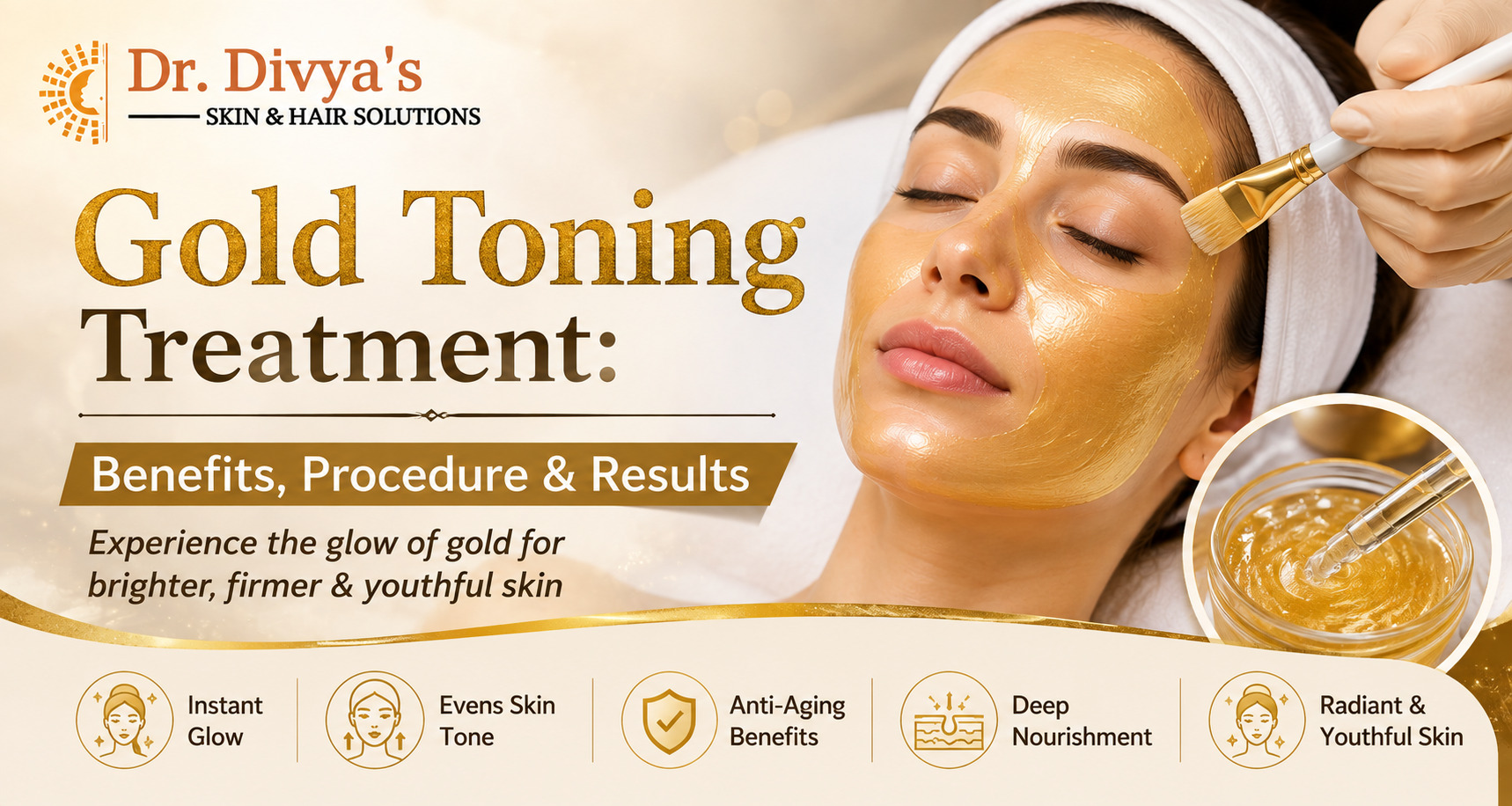
Gold toning treatment is a gentle skin brightening laser for sensitive and tanned skin. Learn benefits, procedure steps, results & FAQs. Book now in Bangalore.
Read More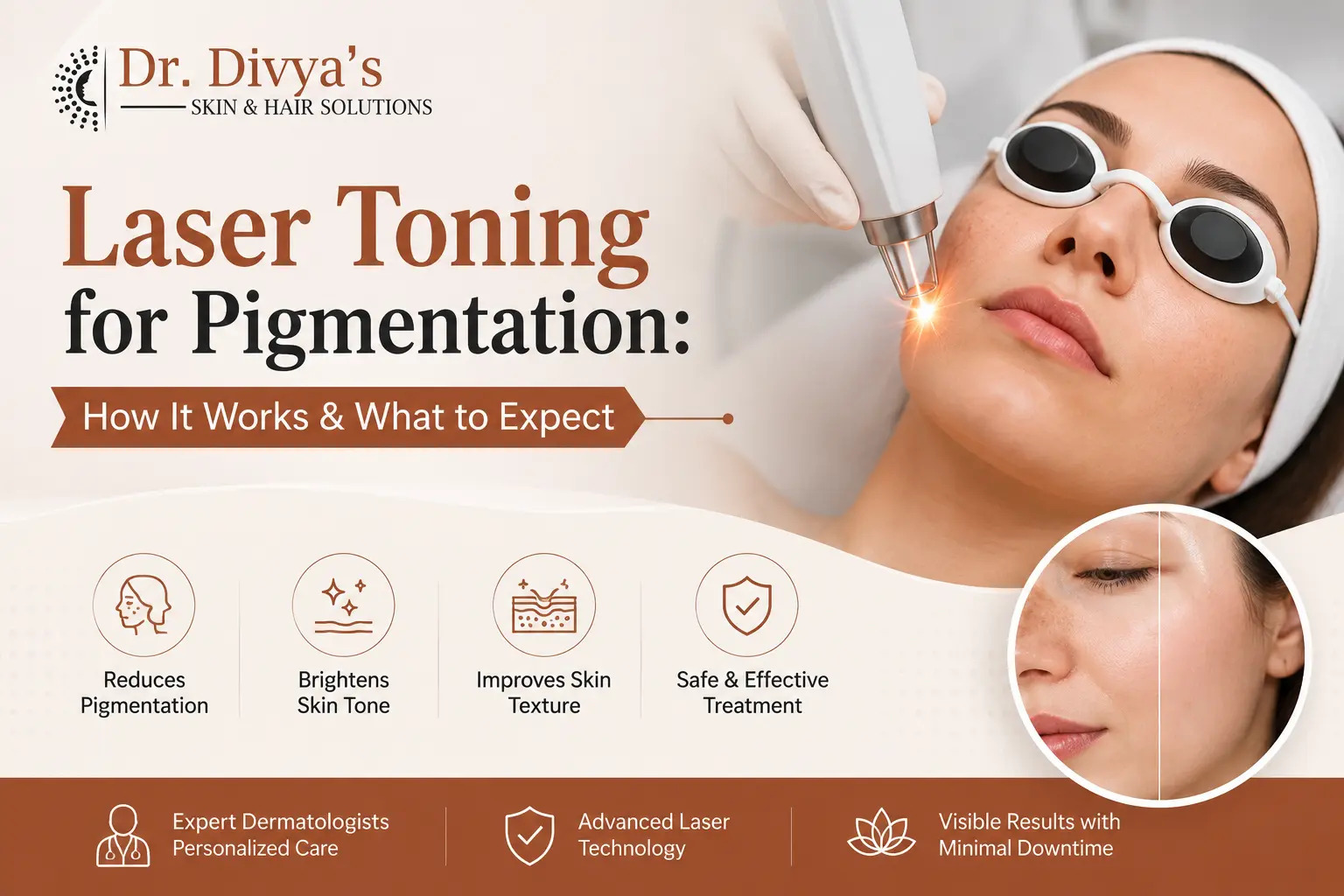
If dark patches or uneven skin tone have been bothering you, laser toning could be the answer. This post breaks down how it works, what it feels like, how many sessions you will need, and what to expect after each visit. No jargon. Just real talk.
Read More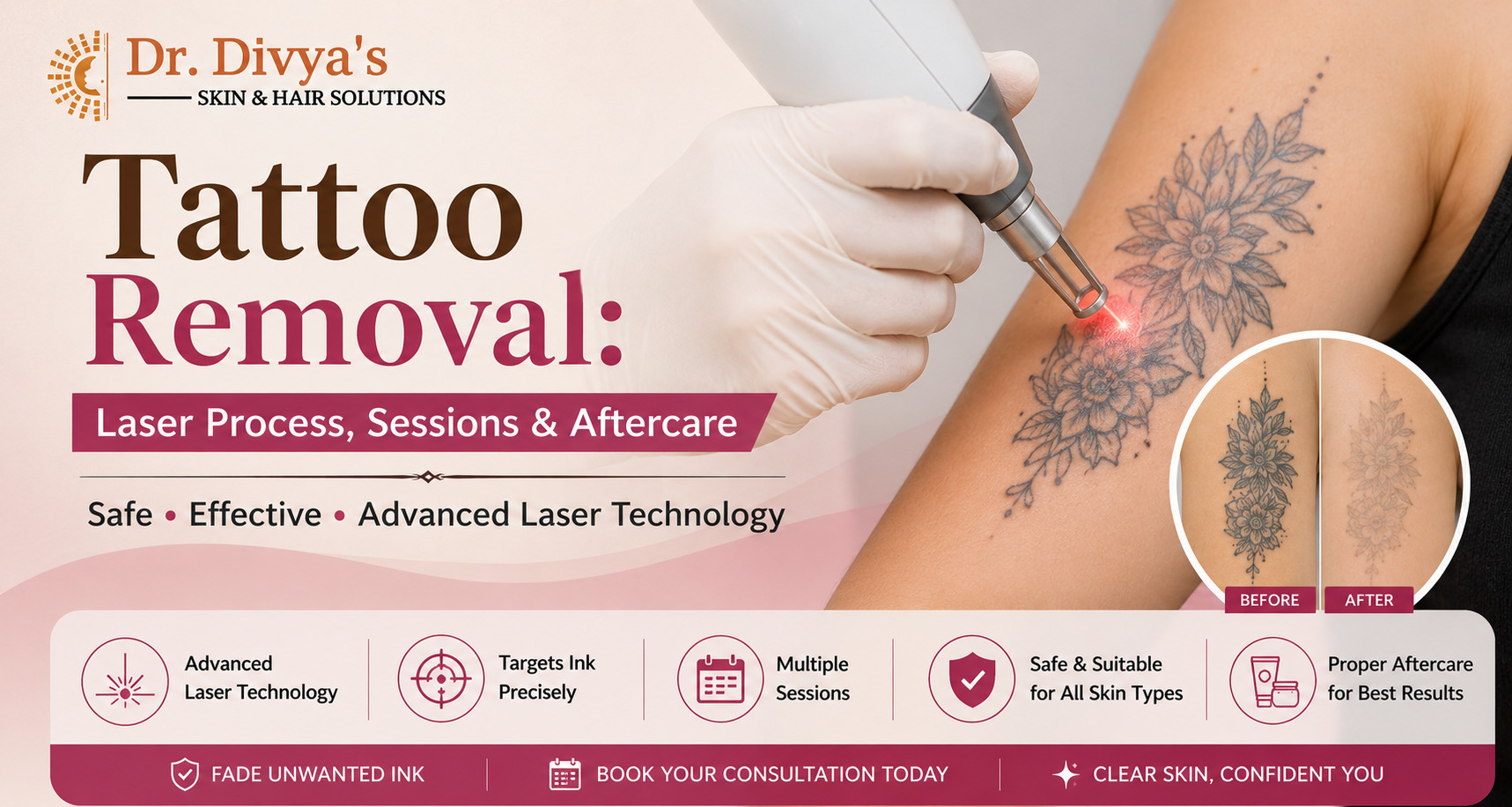
Laser tattoo removal breaks ink particles for natural elimination. Learn how it works, number of sessions needed, pain options, aftercare & risks.
Read More
This complete guide will answer all your questions. Whether you are looking for an instant glow facial treatment or want to understand the Hollywood peel cost and benefits, this article covers everything you need to know.
Read More
This article walks you through everything you need to know about skin pigmentation, what causes it, the different types, the best treatment options available in Bangalore, and how to prevent it.
Read More